The Causes and Cures of EOT Crane Runway Skew
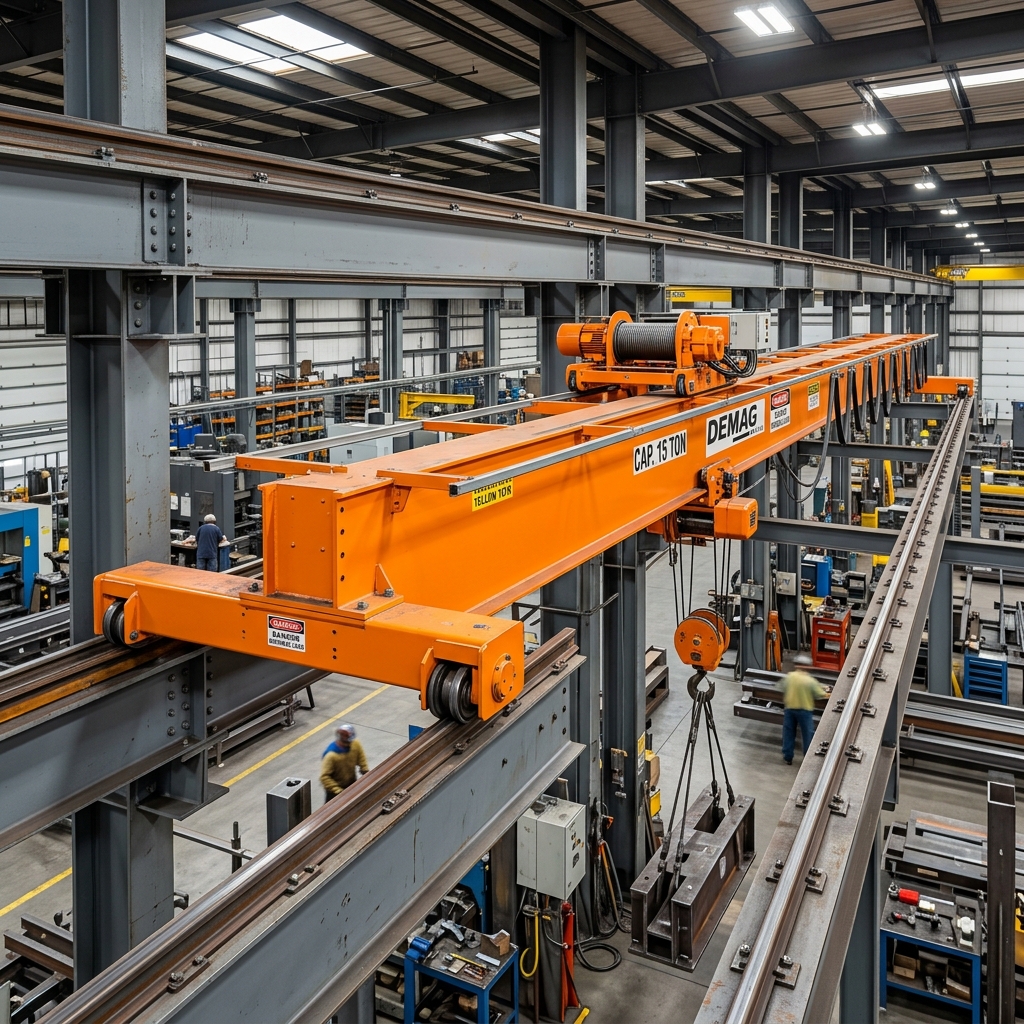
If your overhead EOT crane is emitting loud, high-pitched squealing sounds during long travel, or you notice excessive metallic powder near the wheels, you are likely experiencing runway misalignment. Let's look at how skew develops and how to fix it.
1. Why Do Runways Alignments Go Out of Track?
- Building settling or foundation shifts over years of heavy operation.
- Impact stress from extreme or repetitive off-center lifts.
- Loose structural column anchor bolts or rail clips.
2. The Impact of Unequal Wheel Flange Wear
Skewed rails put severe axial thrust on wheel bearings, causing early motor failures and structural stress on the girder connections. Utilizing precision **Laser alignment surveys** is the ultimate way to measure track span and height variations down to fractions of a millimeter.
Have Specific Lifting Requirements?
Get a precise structural drawing, span clearance checks, and a comprehensive quote within 24 hours.
Frequently Asked Questions
Get quick answers regarding industrial cranes, heavy lifting parameters, and engineering protocols.
Single girder EOT cranes are typically ideal for lighter lifting capacities (up to 15-20 Tons) and shorter spans, offering cost-efficiency and lower building load. Double girder EOT cranes are recommended for heavy-duty applications (up to 100+ Tons), longer spans, higher hook heights, and intense continuous duty cycles.
All DBS Engineers overhead cranes are custom-engineered and fabricated in strict compliance with IS:3177 and IS:4137 Indian Standards, as well as international FEM (Federation Europeenne de la Manutention) guidelines, ensuring precise structural deflection ratios and safety factor compliance.
The standard lead time varies from 4 to 8 weeks depending on the capacity, structural span complexity, and specialized automation features. The timeline includes design approval, steel plate rolling, box-girder assembly, testing bed load trials, and shipping.