
Executing the 5-Minute Pre-Shift Crane Inspection
An operator should never assume a crane is in perfect condition just because it worked fine yesterday. Pre-shift visual and operational inspections identify minor faults before they escalate into high-cost breakdowns or workplace accidents.
Step-by-Step Checklist:
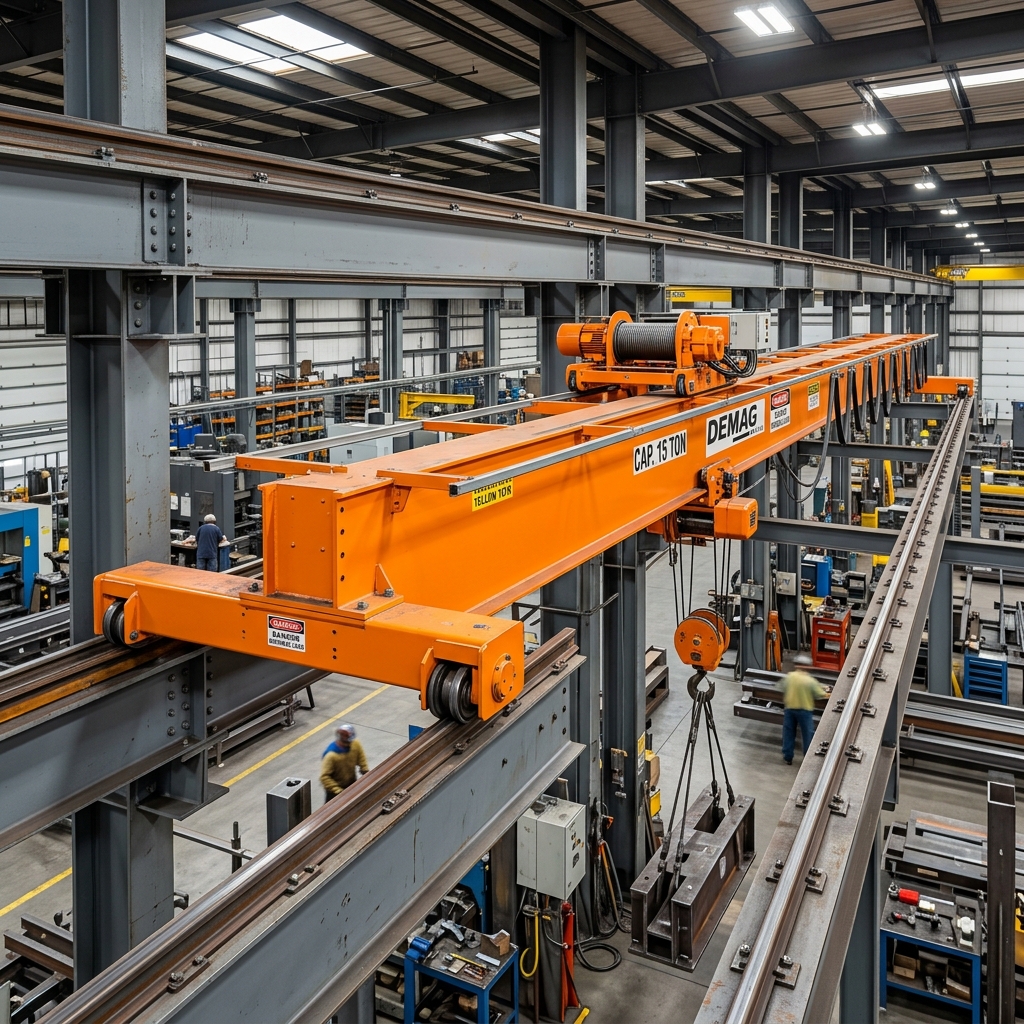
- Step 1: Visual Area Check. Ensure no foreign obstacles are blocking the crane runway rails. Check for grease leaks on the floor.
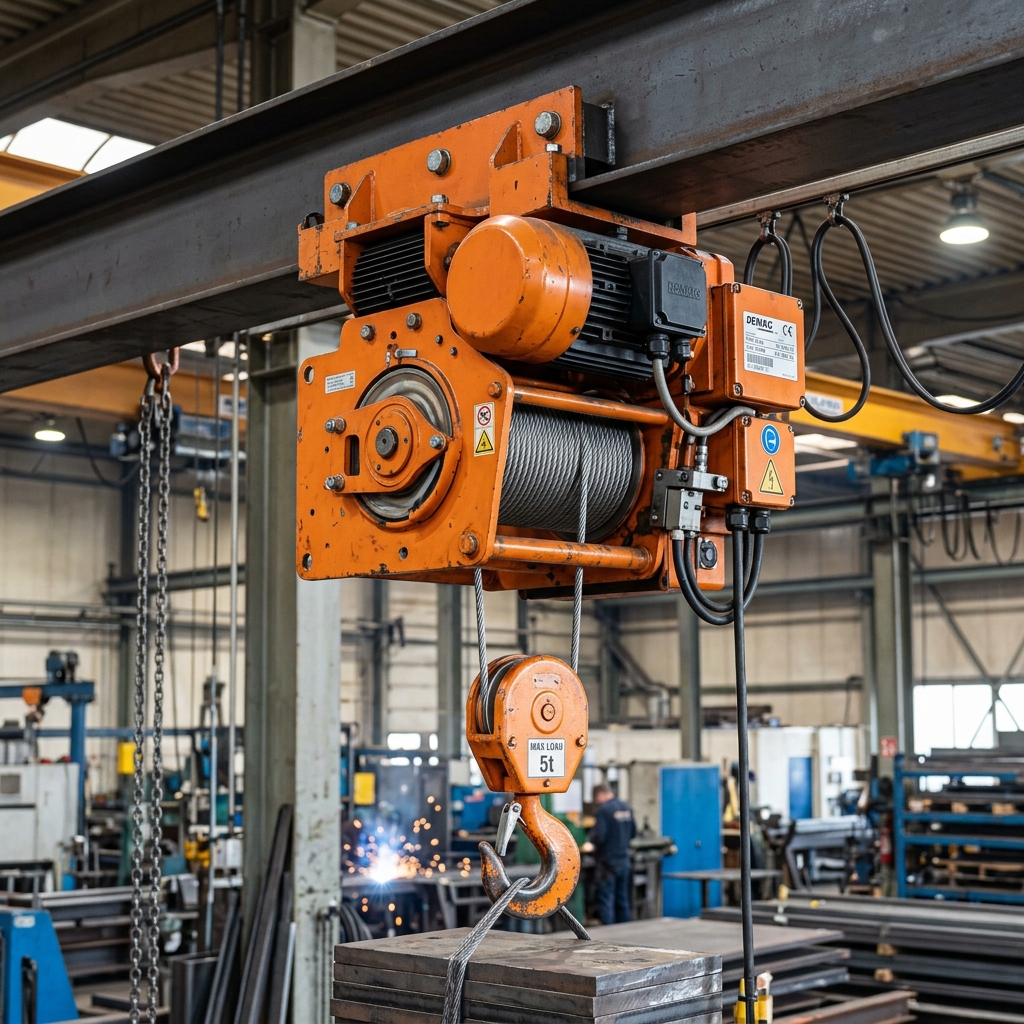
- Step 2: Inspect the Hook and Latch. Check the hook for visible bends, twists, cracks, or throat openings. Verify the safety latch snaps shut.
- Step 3: Audit the Wire Rope. Inspect the rope for kinks, birdcaging, severe wear, or dry strands. Check that the rope sits correctly inside the drum grooves.
- Step 4: Operational Limit Tests. Run the hoist up with zero load to verify that the upper limit switch triggers correctly before the hook block collides with the drum.
Have Specific Lifting Requirements?
Get a precise structural drawing, span clearance checks, and a comprehensive quote within 24 hours.
Frequently Asked Questions
Get quick answers regarding industrial cranes, heavy lifting parameters, and engineering protocols.
Single girder EOT cranes are typically ideal for lighter lifting capacities (up to 15-20 Tons) and shorter spans, offering cost-efficiency and lower building load. Double girder EOT cranes are recommended for heavy-duty applications (up to 100+ Tons), longer spans, higher hook heights, and intense continuous duty cycles.
All DBS Engineers overhead cranes are custom-engineered and fabricated in strict compliance with IS:3177 and IS:4137 Indian Standards, as well as international FEM (Federation Europeenne de la Manutention) guidelines, ensuring precise structural deflection ratios and safety factor compliance.
The standard lead time varies from 4 to 8 weeks depending on the capacity, structural span complexity, and specialized automation features. The timeline includes design approval, steel plate rolling, box-girder assembly, testing bed load trials, and shipping.