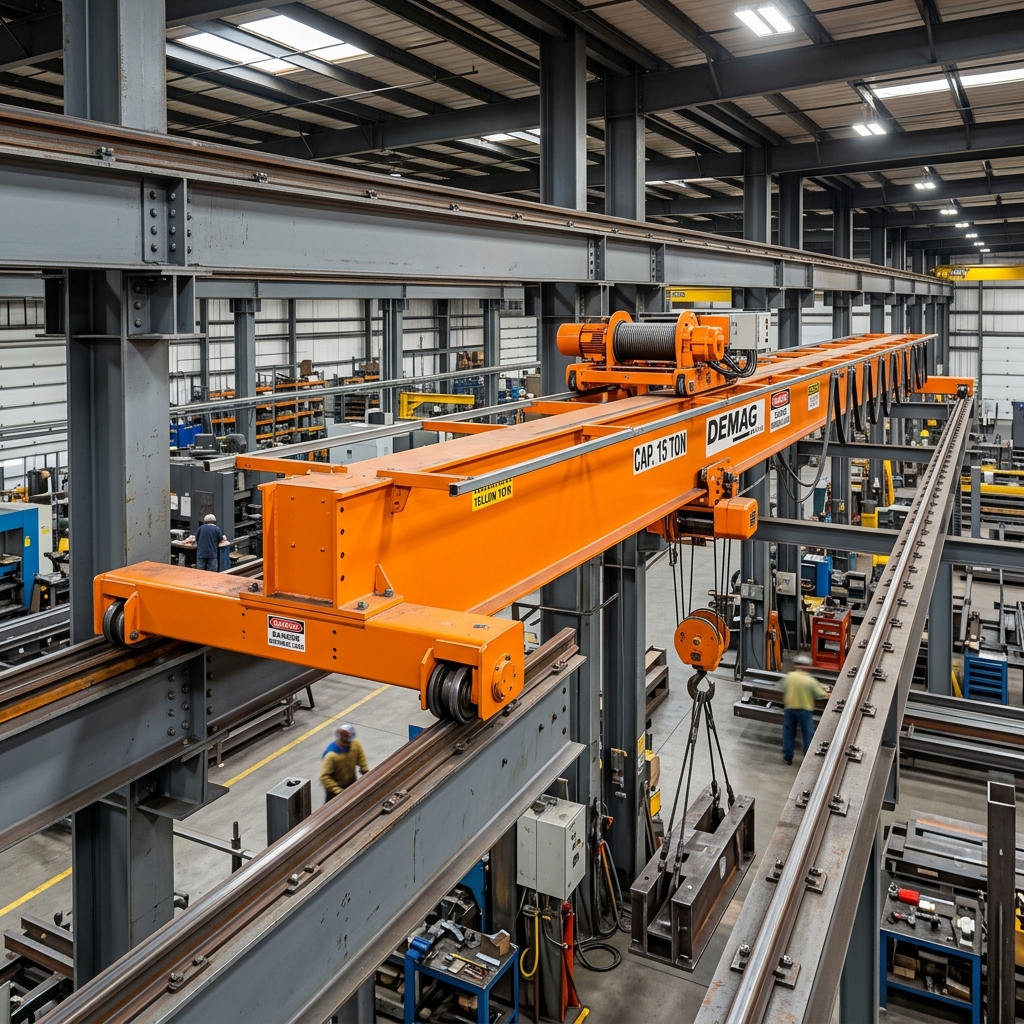
Chain vs. Wire Rope: The Ultimate Hoist Comparison
A hoist is the mechanical engine of any lifting layout. Selecting the wrong type of hoist can lead to early failure or excessive operating costs. Let's evaluate Electric Chain Hoists against Wire Rope Hoists.
1. Electric Chain Hoists
Ideal for lower capacities (typically up to 5 Tons) and precise local assembly work. **Advantages:**
- Compact design, saving headroom.
- Excellent vertical lift alignment (chain does not drift during wind/lift).
- Extremely cost-effective for general machine shops.
2. Electric Wire Rope Hoists
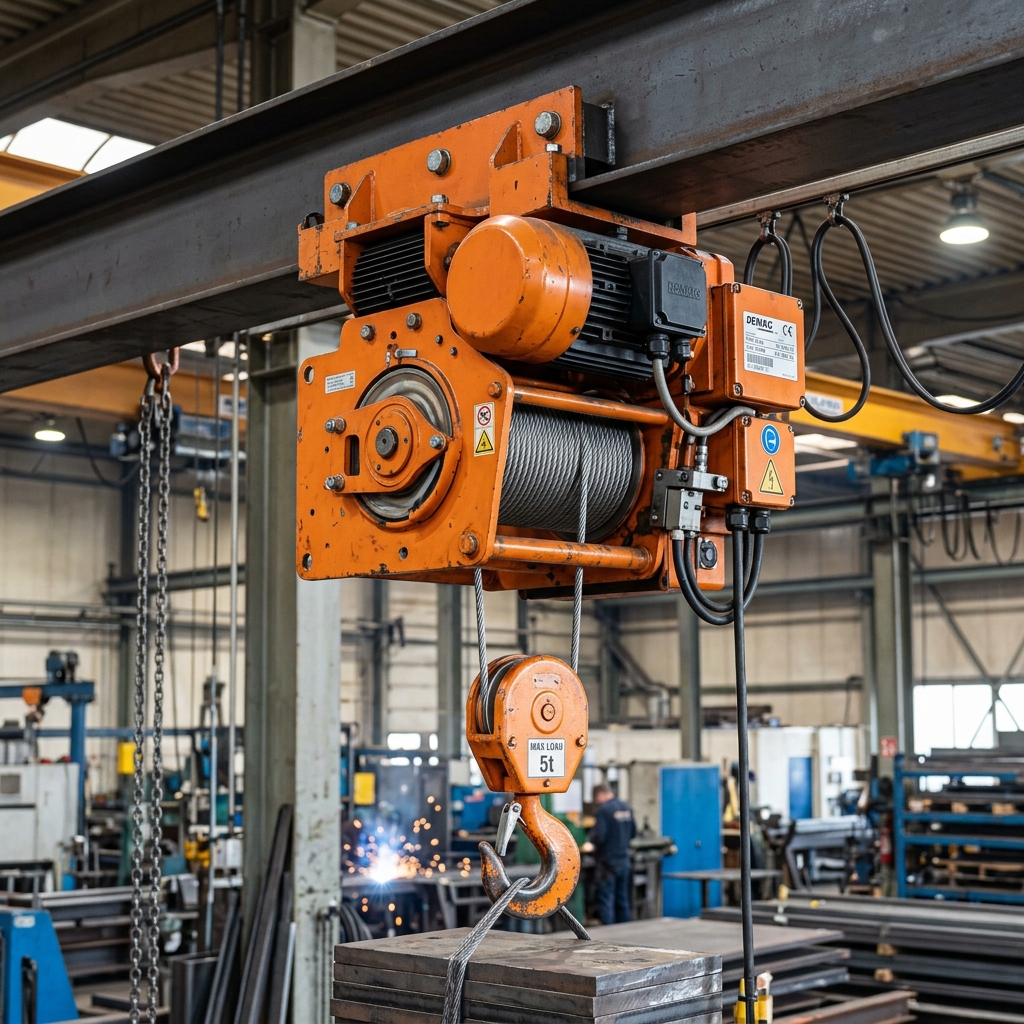
The standard for heavy-duty manufacturing and capacities from 5 Tons to over 100 Tons. **Advantages:**
- Capable of extreme speeds and high lift heights.
- Supports continuous heavy-duty duty classes (CMAA Class D, E, F).
- Rugged structure designed for foundries, steel fabrication, and rough environments.
Have Specific Lifting Requirements?
Get a precise structural drawing, span clearance checks, and a comprehensive quote within 24 hours.
Frequently Asked Questions
Get quick answers regarding industrial cranes, heavy lifting parameters, and engineering protocols.
Single girder EOT cranes are typically ideal for lighter lifting capacities (up to 15-20 Tons) and shorter spans, offering cost-efficiency and lower building load. Double girder EOT cranes are recommended for heavy-duty applications (up to 100+ Tons), longer spans, higher hook heights, and intense continuous duty cycles.
All DBS Engineers overhead cranes are custom-engineered and fabricated in strict compliance with IS:3177 and IS:4137 Indian Standards, as well as international FEM (Federation Europeenne de la Manutention) guidelines, ensuring precise structural deflection ratios and safety factor compliance.
The standard lead time varies from 4 to 8 weeks depending on the capacity, structural span complexity, and specialized automation features. The timeline includes design approval, steel plate rolling, box-girder assembly, testing bed load trials, and shipping.