Engineering Principles of Portal Crane Structures
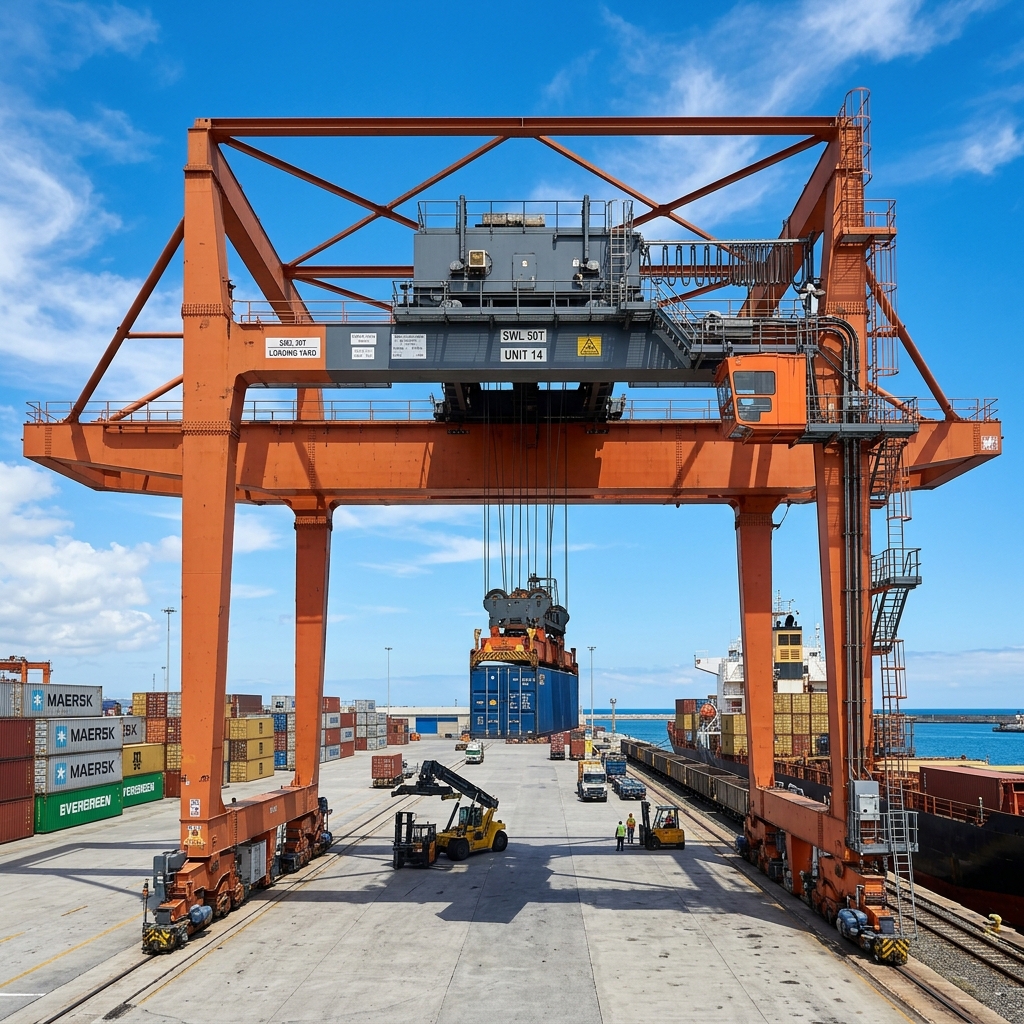
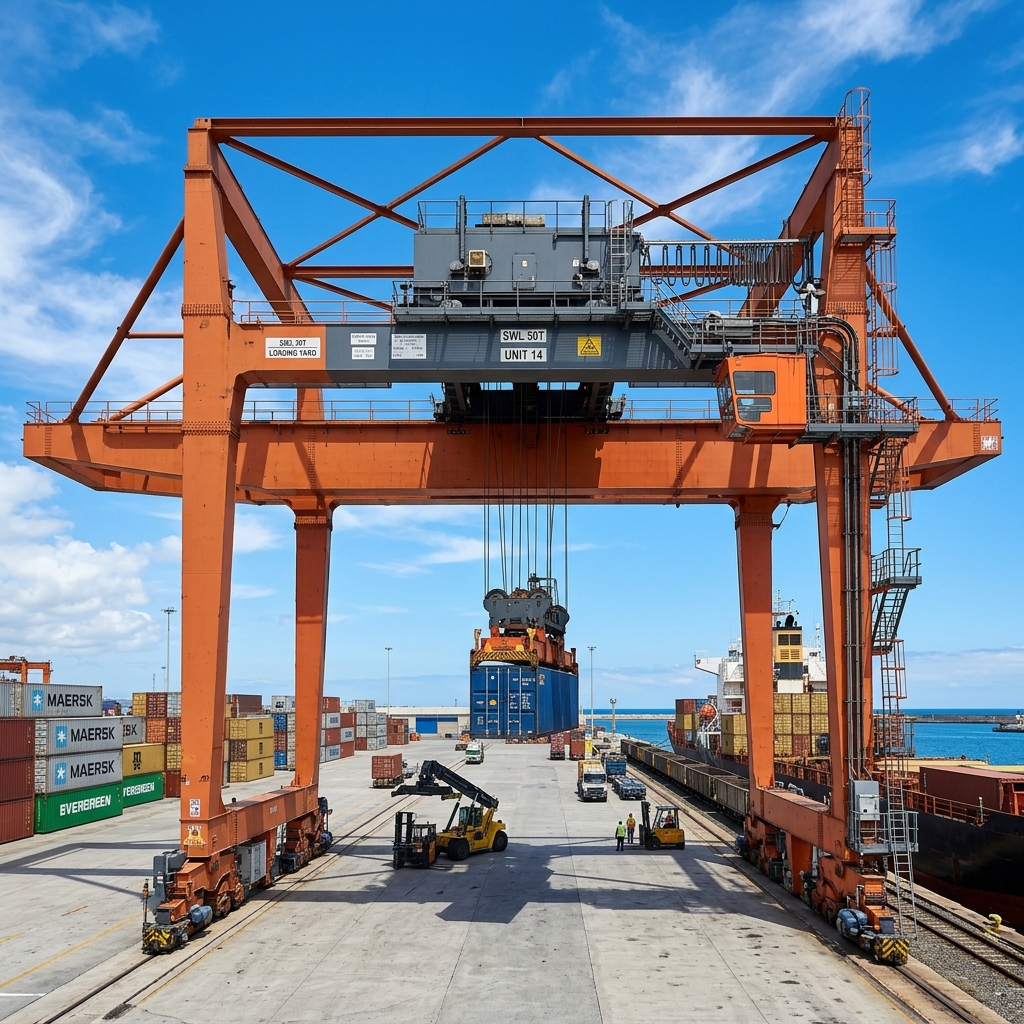
Unlike EOT cranes which travel on elevated runways suspended from the factory ceiling, gantry cranes utilize ground-level tracks and rigid support legs to support the overhead bridge. This configuration introduces unique structural dynamics.
1. Balancing Leg Rigidity with Runway Movement
High-capacity gantry cranes are engineered with one **rigid leg** and one **flexible leg**. This dual leg configuration prevents structural distortion from temperature-induced thermal expansion or minor track misalignment. The flexible leg acts as a pin-joint, allowing micromovements while the rigid leg absorbs lateral forces.
2. Outdoor Wind Load Calculations
Outdoor gantry cranes act like sails in high wind conditions. Structural engineers calculate severe wind shear loads, integrating automatic rail clamps, storm anchors, and anemometers that lock the crane down if wind speeds exceed safe operational limits.
Have Specific Lifting Requirements?
Get a precise structural drawing, span clearance checks, and a comprehensive quote within 24 hours.
Frequently Asked Questions
Get quick answers regarding industrial cranes, heavy lifting parameters, and engineering protocols.
Single girder EOT cranes are typically ideal for lighter lifting capacities (up to 15-20 Tons) and shorter spans, offering cost-efficiency and lower building load. Double girder EOT cranes are recommended for heavy-duty applications (up to 100+ Tons), longer spans, higher hook heights, and intense continuous duty cycles.
All DBS Engineers overhead cranes are custom-engineered and fabricated in strict compliance with IS:3177 and IS:4137 Indian Standards, as well as international FEM (Federation Europeenne de la Manutention) guidelines, ensuring precise structural deflection ratios and safety factor compliance.
The standard lead time varies from 4 to 8 weeks depending on the capacity, structural span complexity, and specialized automation features. The timeline includes design approval, steel plate rolling, box-girder assembly, testing bed load trials, and shipping.